Over three December days on Terschelling, artist Dávid Koronczi met farmers and beachcombers, toured a cheesemaker, and scoped workspaces and sites with the Oerol team — first steps towards a project that will move between the island’s freshwater stories and its shifting coast.
Dávid’s first site visit (2–4 December) was about listening and looking. The days began in conversation with local culinary experts Flang & Willemijn about the Zilte Tuin — salt-tolerant growing as a lived response to rising salinity — followed by a wander through the beds themselves. It set the tone: science in the background, daily practice in the foreground, and food never far away.
Back in middle of the island, the team opened up the Oerol warehouse at Kinnum so Dávid could see where materials and ideas might be stored and tested; the upstairs atelier looks like the best place to work from during the residency. Local event producer and warehouse manager Peer joined to point out what’s tucked where (and to be on hand with the forklift, if needed). Later, programmer Marin de Boer walked Dávid through the pick-your-own Pluktuin in Hoorn as a possible public-facing spot — a place where encounters might happen at the pace of everyday island life.

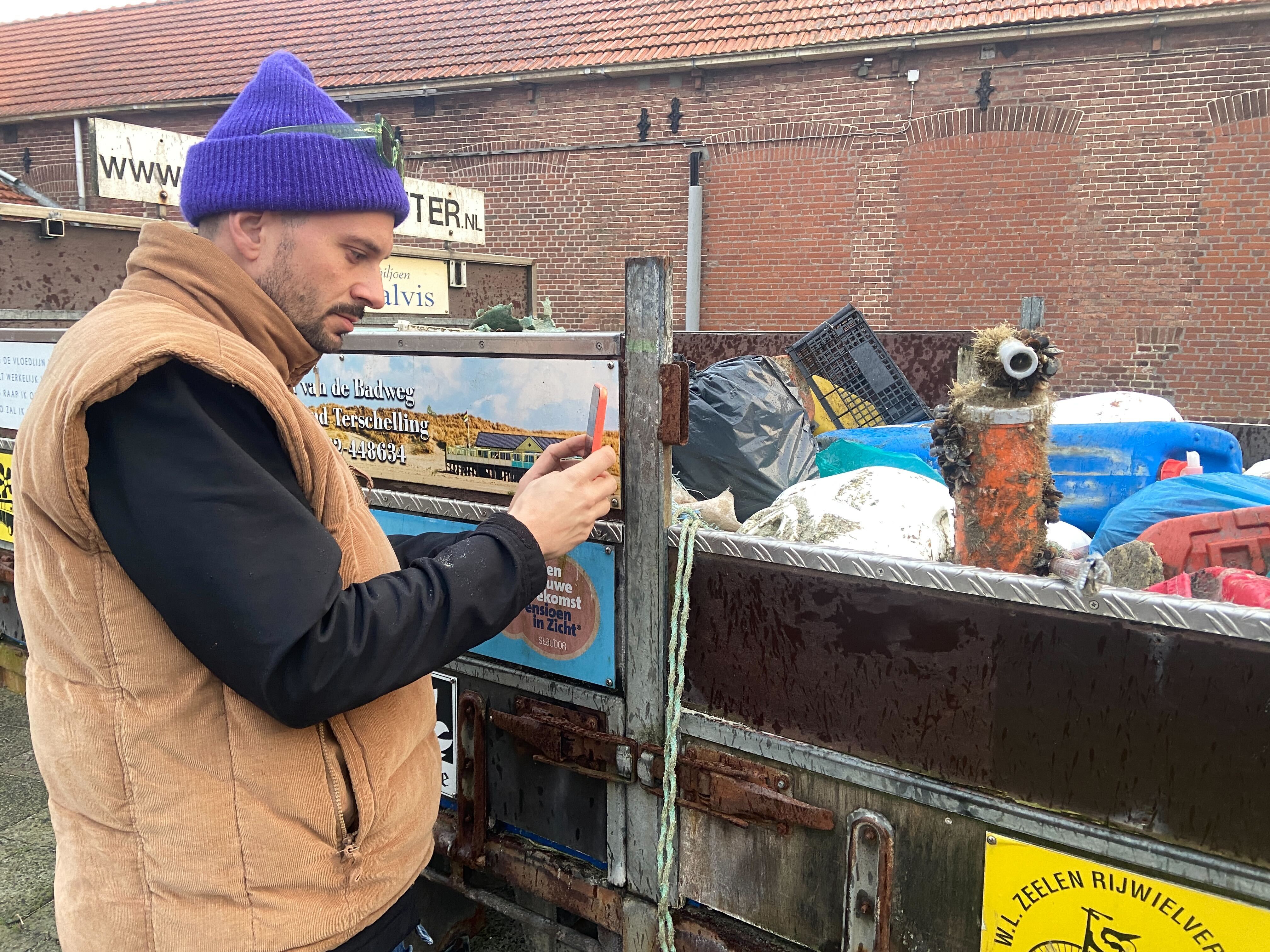
A visit to organic sheep farm De Zeekraal brought a full tour of the cheesemaking — a reminder that fresh water, salt and land use meet not just in maps and models but in a working dairy. From there the route bent towards the island’s rough edges: the forestry commission’s depot and the Nollekes, a former landfill site and beloved theatre location, and finally the trailer of the Milieujutter (ecological beachcomber) piled high with sea-worn plastic and rope. The photos above show Dávid documenting a battered crate and other finds — objects shaped by wind and tide that speak to the coast’s constant pull.
All of this folds back into the two Dutch briefs: the freshwater lens hidden beneath the sand, and the debate around opening the sea dyke at Boschplaat to bring back coastal dynamics. This first visit didn’t try to solve anything; it sketched a way of working — part studio, part field — that will guide the months ahead.
What’s next? A joint lab in Dorset this spring will let the LAND artists compare notes outdoors before Dávid returns for a full residency on the island in May, leading to public moments during Oerol Festival 2025.