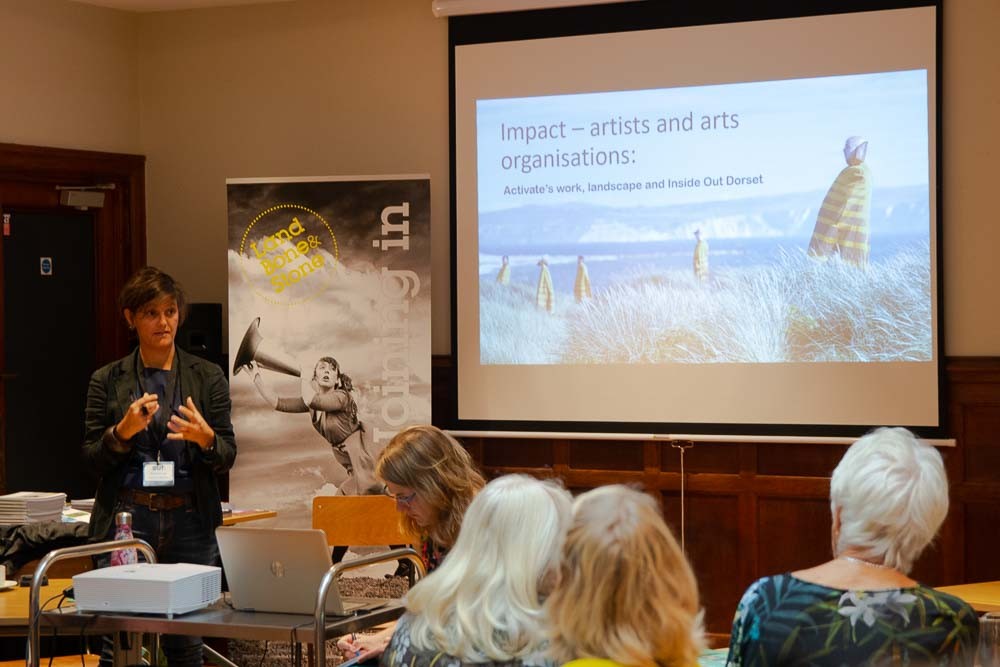
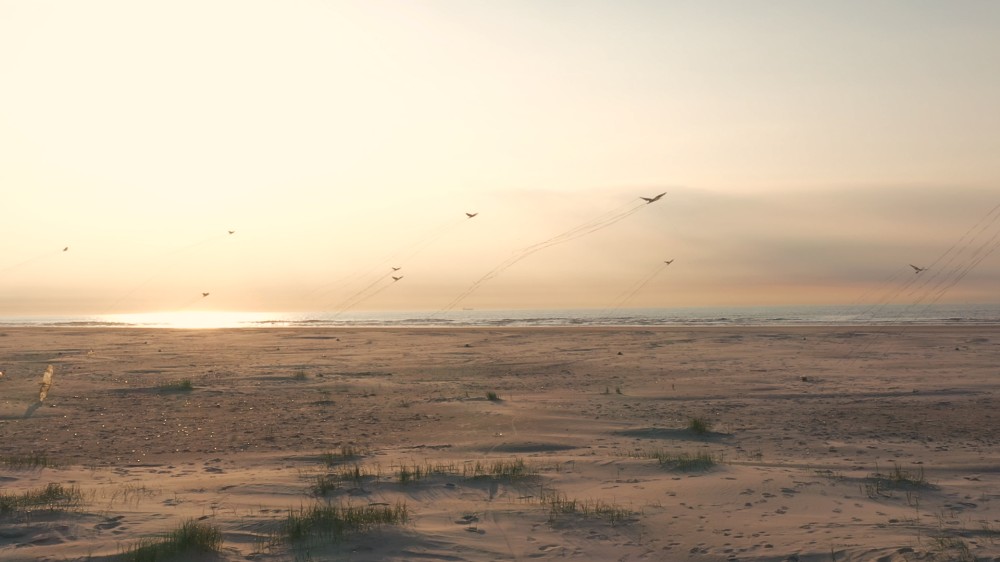
Terschelling was the setting for our third matchmaking visit. Oer ol designed an open programme so we could hear the island from many angles, then turn those conversations into clear directions for artistic work.
We began with a crash course in the island’s history and geology at Museum Het Behouden Huis, led by Richard van Veen, before heading out with Staatsbosbeheer forest rangers to see how land management decisions shape today’s dunes, woods and wetlands.The day continued with the Walk of Grief with Arjan Berkhuysen and Anemoon Elzinga, followed by a foraged cook-up with Flang in de Pan—conversations flowed between ecology, memory and food. The next morning we took the Strandbus along the North Sea beach with guide Chris Scheepstra, visited organic dairy farmer Neeke van Zwol, and heard a joint presentation by landscape archaeologist Dr Heleen van Londen and artist Sjoerd Willem Bosch about their upcoming visual art project during Oerol festival. Two wrap-ups—first on the Dutch transitions, then with the full partner group—helped collect the threads.

The freshwater lens quickly came into focus. Beneath the sand lies a vast store of freshwater floating on saltwater; as sea level rises, saltwater rises too, pushing the lens upward and altering life above ground—from agriculture and nature to drinking water and building. It’s an invisible structure with visible effects: van Zwol has seen ditches near the outer dyke turn too salty for cattle, and plant communities across the island are shifting with salinity. Researchers model scenarios; others test adaptation, from water-retention measures to salt-tolerant crops.
That science meets strong feeling. We looked at Waterpracht, a water-retention project where new dams and widened ditches sparked local resistance; two dams were even destroyed. After an unusually wet winter, some residents blamed the interventions for high water, despite their aim to create capacity for exactly that. These tensions—between mitigation and perception, long-term care and day-to-day experience—were present in many conversations on the island.

Around the table and out in the field were colleagues from Oerol, Le Citron Jaune and SYTEV, trainers from Activate Performing Arts, and a wide local mix: archaeologists and archivists, land stewards, scientists, farmers, entrepreneurs and residents. The variety was deliberate—Oerol’s approach was to gather multiple readings of the landscape before committing to the questions artists will be asked to work with.
By the end of the visit, two directions were ready to carry forward as briefs: the freshwater lens—including how to make an unseen “ghost island” legible to wider audiences—and a second line around the sea dyke opening at Boschplaat, asking how art might help communities think with change in a protected area. These sit within Oerol’s programme ecology and will lead into a preparatory site visit, a joint lab in Dorset, and a residency with public sharing during Oerol 2025.
For LAND, the matchmaking visits are a new way of working. They bring local expertise and visiting partners together to read a landscape side by side and turn that shared reading into workable briefs for artists. On Terschelling, that meant treating science, stewardship and daily life as part of the same conversation—and letting the island’s freshwater and salt stories guide what happens next.