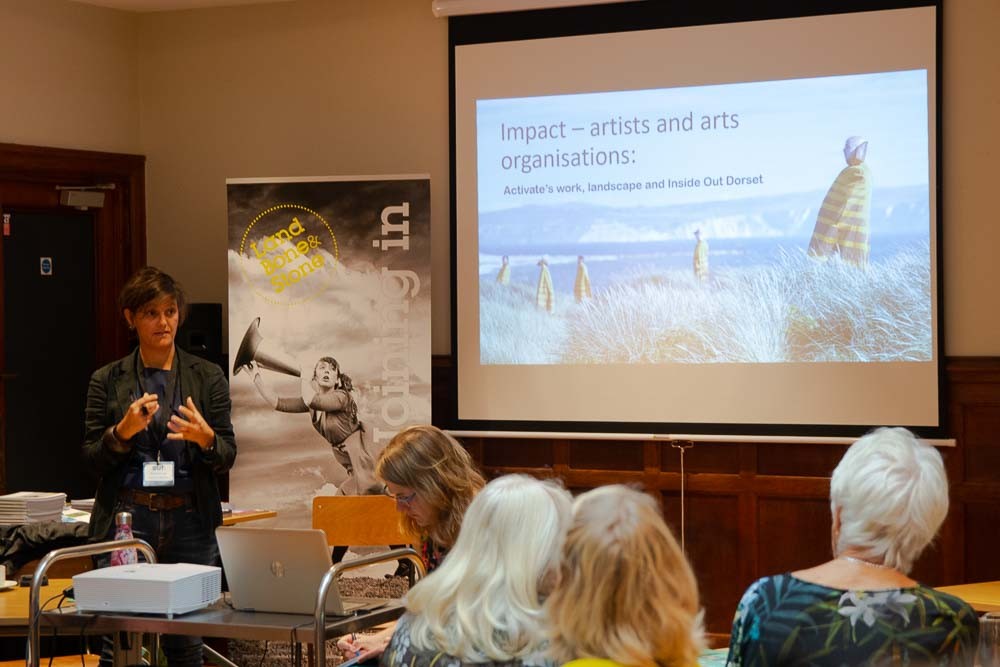
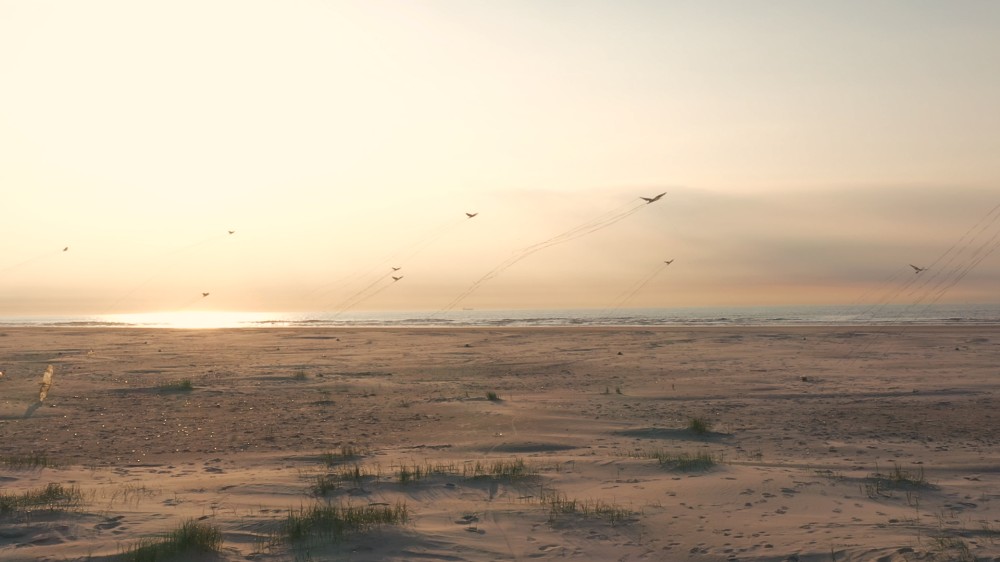
From 31 March to 3 April 2025, an international micro-residency took place on the Isle of Portland (Dorset, United Kingdom), organised by Activate Performing Arts in collaboration with partners within the LAND network. The residency formed part of the preparatory phase for ongoing and future artistic trajectories across several European landscapes.
Preparation and context
The residency was facilitated by Bill Gee and Kate Wood (Activate Performing Arts). In advance of the visit, individual meetings were held with all participating artists and partners, alongside a collective online preparation meeting two weeks prior to arrival. These moments focused on aligning expectations, deepening understanding of each artist’s practice and identifying the most appropriate timing for an in-person residency within the wider project trajectory.
Activate Performing Arts is a UK-based not-for-profit organisation specialising in artistic practices in protected landscapes and international exchange between artists, local communities and land stewards. Within this project, Activate was responsible for facilitation, reflection and training.
The site: Isle of Portland
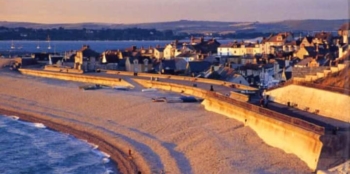
The Isle of Portland was deliberately selected for its layered character: a geographically contained place surrounded by water, with a strong local identity and a history of significant human intervention. Themes such as military presence, heritage, migration (including the accommodation vessel Bibby Stockholm) and local activist movements positioned Portland as a highly relevant context for reflecting on landscape transitions.
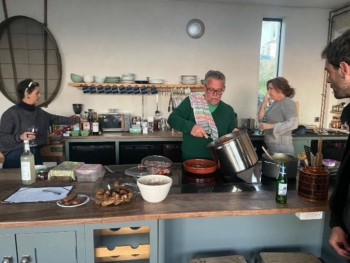
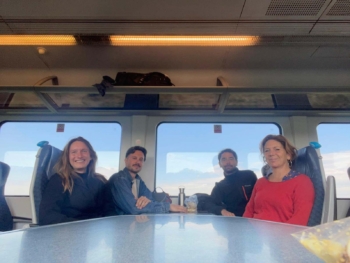
The artists and facilitators stayed together in a large house in Chiswell, overlooking the Jurassic Coast World Heritage Site. This shared living and working environment offered space for focused conversations, individual reflection and communal meals, fostering trust and deeper exchange within the group.
Programme and exchange
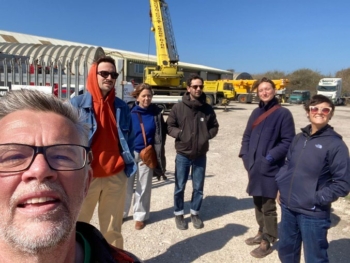
The first day focused on arrival and getting to know one another. On the second day, artists shared their practices and explored the landscape through walks along the coast. In the afternoon, Ian Rees (Countryside Projects Manager, Dorset National Landscape) contributed an in-depth perspective on water transitions in the region. Water emerged as a connecting theme across all artistic contexts involved: the Camargue (France), Terschelling (the Netherlands) and multiple regions in Slovakia.
On the third day, the artists worked in pairs and individually, including time spent at Portland Bill. The group also met Rocca Holly-Nambi and Catherine Bennett from b-side, a locally rooted arts organisation with a strong focus on community engagement, inclusion and activism. The day concluded with an exchange involving local artists.
The final day centred on reflection and forward planning. The artists articulated key questions to guide their next steps, addressing themes such as working with young people and marginalised communities, ecological resilience, ritual and choreography, temporary architecture and the role of the ‘outsider’ artist within local contexts. It was also noted that, alongside water, the presence and position of Roma communities forms a shared concern across several of the landscapes involved.
The group agreed to continue collective discussions online, with ongoing access to support from subcontractor Activate Performing Arts.
Significance and outcomes
The micro-residency created valuable space for focused reflection away from day-to-day routines and strengthened connections between artists and partners. The combination of shared place, collective inquiry and engagement with local expertise generated new perspectives for the ongoing residencies within the LAND network.
As one participant reflected:
“I found it helpful to be in a micro-residency format, because it really cut me away from day-to-day routines. I felt welcomed, taken care of. The exchange with the other artists was wonderful, on a personal and professional level.”
The impact of the residency continued beyond the visit itself, through presentations, knowledge-sharing and renewed artistic energy within the participants’ own networks.The Portland residency thus functioned as both an artistic and relational anchor within the wider European collaboration, providing a strong foundation for the next phases of each artist’s work.