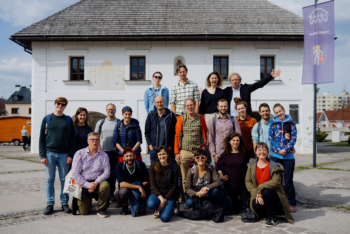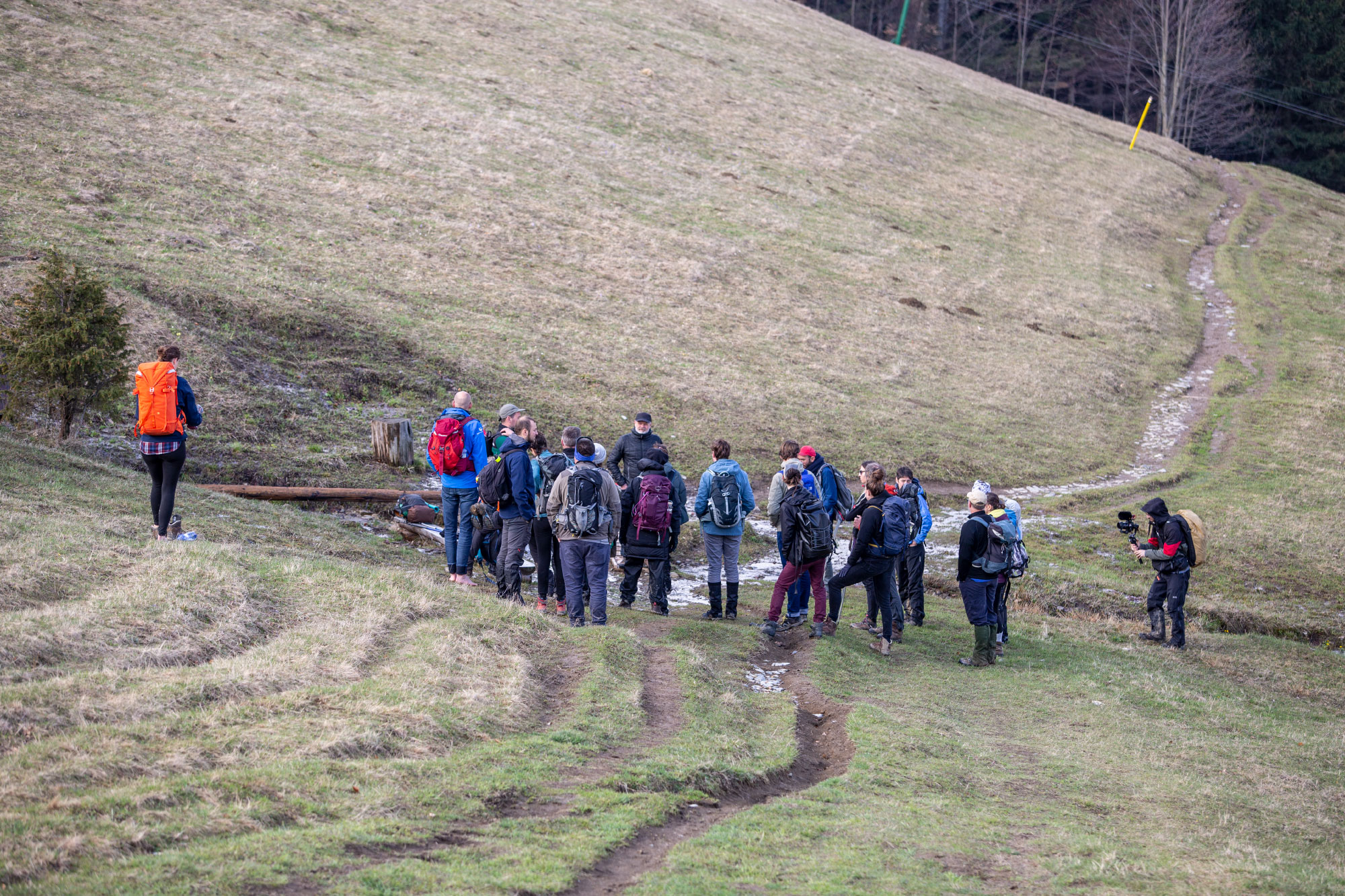
The working in LANDscapes project has just kicked off its first international training week, and Slovakia proved to be the perfect starting point. Hosted by Aktívny Park Rajec, the four-day programme brought artists, producers and land stewards together in and around Žilina, with sessions ranging from high mountain hikes to public artist talks.
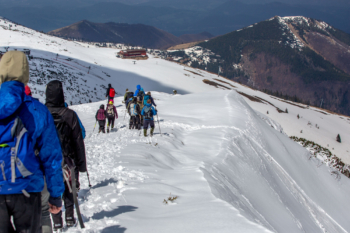
We began in Malá Fatra National Park, hiking through the Jánošíkove diery canyons and up to mountain huts like Chata na Grúni and Chata pod Chlebom. The physical challenge was paired with conversations about how these shelters shape movement and mindset, plus talks from park experts about flora, fauna, tourism and conservation.
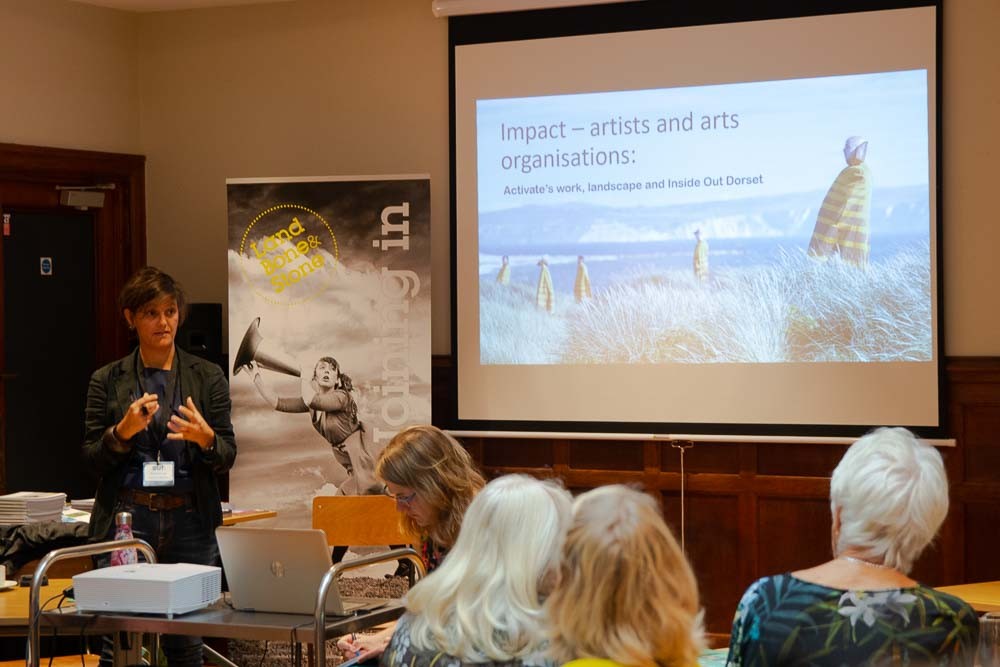
The third day shifted to Nová synagóga Žilina, where we welcomed a local audience of around sixty and more than 500 viewers via livestream. Partners introduced their approaches to working with landscapes, and twenty artists shared work and ideas, including Lorna Rees, Rob van Rijswijk, Beatrice Guyot, Jaroslav Kyša, Anton Čierny, Sofie Doeland, Jente Hoogeveen, WOVEN, Laurien Zwaans and Veronika Kotradyová. The Mayor of Žilina dropped in, turning the day into a genuine meeting point for perspectives and practices.
The conversations moved far beyond individual projects. We heard reflections on how artists can step into the role of translator between communities and their environments, on the balance between artistic vision and ecological responsibility, and on the value of slowness—walking, staying, noticing—as a method. Shared concerns emerged around climate change, land access, and the fragility of traditional knowledge.
On the final day, we took the early train to Rajec and walked out to Bioclimatic Park Drienová to hear about climate and land-use in the valley. After a traditional lunch, we returned to town for a short history walk, a folk performance in the square, and a food-curatorial event that explored philosophical ideas through taste.
By the end of the week, early threads were taking shape: the need for work that is hyper-local yet internationally connected; the potential of cross-disciplinary teams that combine art, science and lived experience; and the idea that our encounters with landscapes should be reciprocal—offering as much as we take.