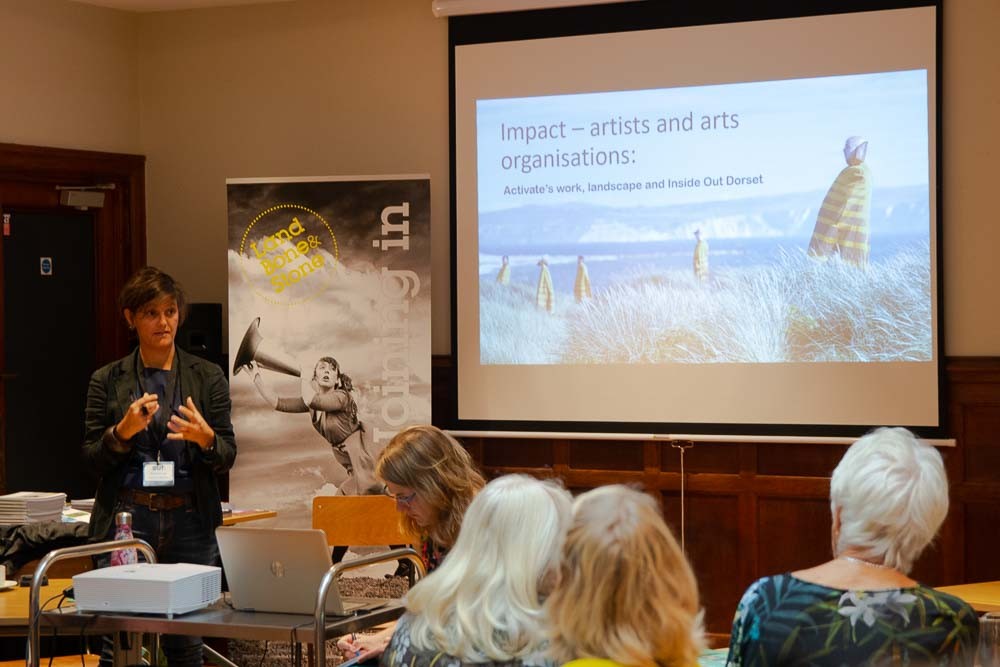
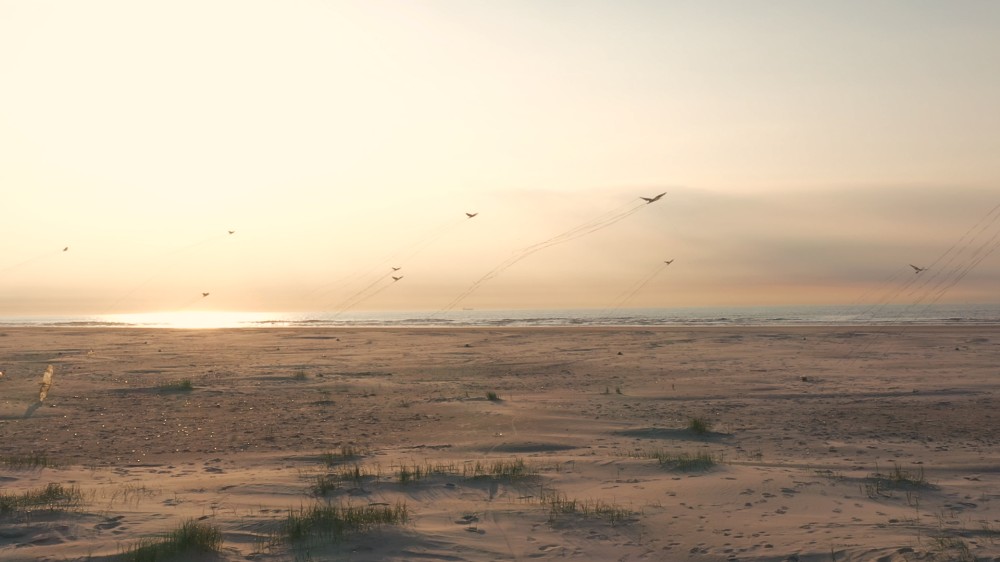
What, where, when. At the start of April, LAND’s 2025 cohort—Dávid Koronczi (working with Oerol on Terschelling), Rita Hoofwijk (working with Le Citron Jaune in the Camargue) and members of Rara Woulib (developing work with SYTEV in northern Slovakia)—came together in Dorset for a four-day joint residency led by Activate Performing Arts. Hosts Bill Gee and Kate Wood shaped the days as a purposeful “micro-residency”: checking assumptions, testing ideas and planning what happens next in each landscape.
Why Activate? Activate Performing Arts is LAND’s training partner: a UK arts organisation with long experience of working in protected landscapes and designing international programmes for artists and land stewards. Within Transitioning LANDscapes they act as facilitators and trainers—so Dorset was the natural place to convene the group for a practical, artist-centred lab.
Where is Portland? The residency was based in a shared house in Chiswell on the Isle of Portland, looking across the UNESCO Jurassic Coast. Portland is prized locally for its stone and maritime heritage; it’s also a place shaped by human interventions and debated futures. The “remote yet connected” setting proved ideal for thinking with a coastline, and with a community.
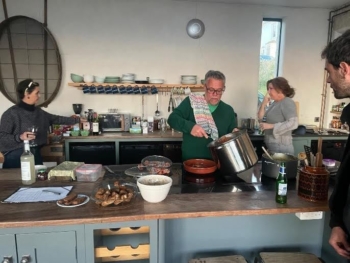
People, place, practice—at the same table. Days were structured around walking, cooking and talking. A morning along the King Charles III / South West Coast Path invited the artists to “read” cliffs, tides and paths as a way into their own contexts back home. After lunch, Dorset National Landscape (the county’s protected-landscape partnership) joined via Countryside Projects Manager Ian Rees to talk through local environmental transitions, sparking comparisons with the Camargue, the Rajčianka Valley and the Wadden Islands.
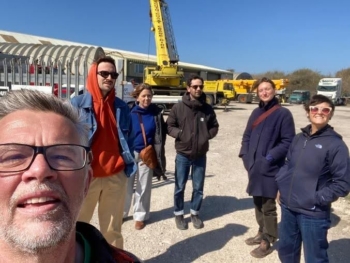
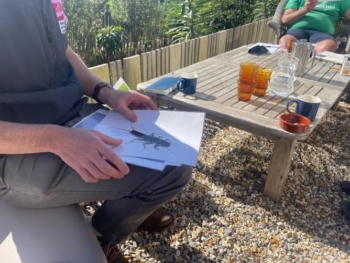
Meeting the neighbours. Mid-week the artists met Portland-based b-side—an arts organisation rooted in the island, commissioning artists to make work with and about the place, often in close step with communities. The exchange (with Director Rocca Holly-Nambi and Community Projects Co-ordinator Catherine Bennett) focused on how to collaborate deeply, communicate clearly and bring audiences into process. That evening the group gave a public talk for local artists.
Who was in the room? Artists: Dávid Koronczi, Rita Hoofwijk and members of Rara Woulib. Hosts/facilitators: Activate Performing Arts (Bill Gee & Kate Wood). Guests: Ian Rees (Dorset National Landscape) and the b-side team. The domestic set-up—big kitchen, big table—helped conversations flow between working sessions and meals, building trust and momentum.
Questions that travelled home with us. On the final morning each artist set out key questions and immediate next steps. Some were practical, others poetic: inviting people to dance again; what kind of “spell” a city might need; how to work with teenagers; whether sculptural traces should remain; how an outsider’s eye can gently open spaces locals might avoid; and, crucially, who the collaborators should be and how to work well with diverse audiences.
“The micro-residency cut me away from day-to-day routines… I felt welcomed and taken care of. The walks, talks and meet-ups were inspiring.”
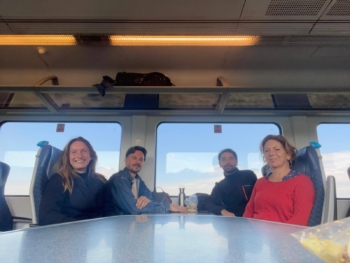
LAND’s artists left together on the same train—still talking, still comparing notes—with a follow-up online check-in scheduled to keep the momentum going. This joint residency sits at the centre of Transitioning LANDscapes: a moment to align methods with places and with each other, so that the works audiences encounter later in 2025 grow from grounded research rather than isolated production.